Child Development Guide 2025 : Milestones, Stages & Expert Tips for Parents
Child development refers to the sequential physical, language, thought and emotional changes that occur in a child from birth to the beginning of adulthood. Understanding these developmental stages helps parents provide appropriate support, recognize potential concerns early, and celebrate their child's unique growth journey. Child development refers to the sequential physical, language, thought and emotional changes that occur in a child from birth to the beginning of adulthood. Understanding these developmental stages helps parents provide appropriate support, recognize potential concerns early, and celebrate their child's unique growth journey.
CHILD DEVELOPMENT
Rohini
3/19/20265 min read
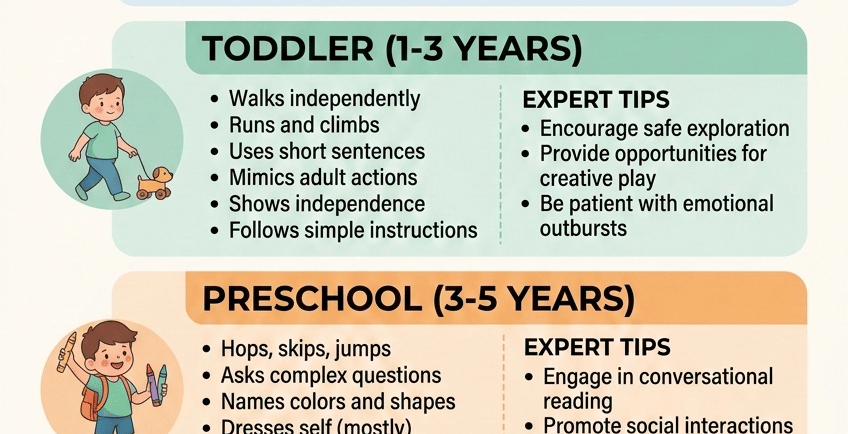
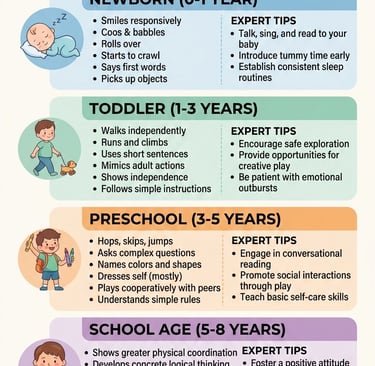
What is Child Development?
Child development encompasses the biological, psychological and emotional changes that occur in human beings between birth and the conclusion of adolescence. This complex process involves multiple interconnected domains working together to shape a child's overall growth and future capabilities.
As a pediatric development specialist with over 15 years of experience working with families, I've witnessed firsthand how understanding developmental milestones transforms parenting approaches and strengthens parent-child relationships.
The Five Core Domains of Child Development
Physical Development
Physical development involves gross motor skills (large muscle movements) and fine motor skills (small, precise movements). This domain includes:
Gross Motor Skills: Rolling, sitting, walking, running, jumping
Fine Motor Skills: Grasping, writing, buttoning clothes, using utensils
Sensory Development: Vision, hearing, touch, taste, smell coordination
External Resource: American Academy of Pediatrics - Physical Development
Cognitive Development
Cognitive development refers to how children think, explore, and figure out things. Key components include:
Memory Formation: Short-term and long-term memory development
Problem-Solving: Logical thinking and reasoning abilities
Language Acquisition: Understanding and expressing thoughts through words
Academic Readiness: Pre-literacy and numeracy skills
Social-Emotional Development
This crucial domain involves learning to interact with others and manage emotions:
Emotional Regulation: Managing feelings appropriately
Social Skills: Sharing, cooperation, empathy development
Self-Awareness: Understanding personal strengths and limitations
Relationship Building: Forming secure attachments with caregivers
External Resource: Zero to Three - Social Emotional Development
Language and Communication Development
Communication skills develop rapidly during early childhood:
Receptive Language: Understanding what others say
Expressive Language: Communicating thoughts and needs
Non-Verbal Communication: Body language, facial expressions
Literacy Development: Reading and writing foundations
Adaptive Development
Adaptive skills help children become independent in daily activities:
Self-Care Skills: Feeding, dressing, hygiene
Daily Living Skills: Following routines, household tasks
Safety Awareness: Understanding and avoiding dangers
Independence Building: Making age-appropriate decisions
Child Development Stages by Age
Infancy (0-12 months)
Physical Milestones:
2 months: Holds head up, begins to smile
4 months: Rolls from tummy to back
6 months: Sits without support
9 months: Crawls, pulls to stand
12 months: First steps, pincer grasp
Cognitive Milestones:
Object permanence understanding
Cause-and-effect recognition
Basic problem-solving emergence
Memory development begins
Social-Emotional Milestones:
Attachment formation with primary caregivers
Social smiling and interaction
Stranger anxiety development
Basic emotional expression
External Resource: CDC - Infant Development Milestones
Toddlerhood (1-3 years)
Physical Development:
Walking becomes steady and confident
Running, jumping, climbing abilities emerge
Fine motor skills improve significantly
Toilet training readiness develops
Language Explosion:
Vocabulary grows from 50 to 1,000+ words
Two-word combinations begin
Following simple instructions
Asking "why" questions frequently
Independence Seeking:
Asserting autonomy ("me do it")
Parallel play with other children
Temper tantrums as emotional expression
Beginning self-control development
Preschool Years (3-5 years)
Cognitive Advances:
Symbolic thinking and pretend play
Understanding basic concepts (colors, shapes, numbers)
Memory improvement and storytelling ability
Pre-academic skill development
Social Skills Expansion:
Cooperative play with peers
Friendship formation begins
Empathy and perspective-taking emergence
Rule understanding and following
Physical Mastery:
Refined gross motor skills (pedaling, throwing)
Improved fine motor control (drawing, cutting)
Independence in self-care activities
Active lifestyle preferences
External Resource: Head Start - Preschool Development
School-Age (6-12 years)
Academic Readiness:
Formal learning skill mastery
Reading fluency development
Mathematical concept understanding
Scientific thinking emergence
Social Complexity:
Peer relationship importance increases
Team sport participation
Moral reasoning development
Cultural awareness expansion
Emotional Maturity:
Better emotional regulation
Increased empathy and compassion
Self-esteem formation
Goal-setting abilities
Adolescence (13-18 years)
Identity Formation:
Personal value system development
Career interest exploration
Peer influence significance
Independence preparation
Physical Changes:
Puberty-related growth spurts
Sexual maturation
Body image concerns
Sleep pattern changes
Cognitive Development:
Abstract thinking capabilities
Future planning skills
Moral reasoning sophistication
Decision-making improvement
External Resource: American Psychological Association - Teen Development
Factors Influencing Child Development
Genetic Factors
Heredity plays a significant role in determining a child's developmental potential. Genetic makeup influences:
Physical characteristics and growth patterns
Cognitive abilities and learning styles
Temperament and personality traits
Susceptibility to certain health conditions
Environmental Influences
Nutrition and Health:
Adequate nutrition supports brain development
Regular medical checkups ensure healthy growth
Physical activity promotes overall development
Sleep quality affects cognitive function
Family Environment:
Secure attachment relationships
Consistent and responsive caregiving
Positive family communication patterns
Stable home environment
Social and Cultural Context:
Community resources and support
Educational opportunities
Cultural values and practices
Socioeconomic factors
External Resource: National Institute of Mental Health - Child Development
Supporting Healthy Child Development
Creating Supportive Environments
Home Environment Optimization:
Establish predictable routines and structures
Provide age-appropriate toys and materials
Create safe spaces for exploration
Maintain positive family relationships
Educational Support:
Choose quality childcare and educational programs
Engage in regular reading activities
Encourage curiosity and questioning
Support homework and learning activities
Promoting Physical Development
Active Lifestyle Encouragement:
Limit screen time appropriately
Encourage outdoor play and exploration
Participate in family physical activities
Provide opportunities for sports and movement
Nutrition Focus:
Offer balanced, nutritious meals
Involve children in meal planning and preparation
Teach healthy eating habits early
Address feeding challenges promptly
Emotional and Social Support
Emotional Intelligence Building:
Validate children's feelings and emotions
Teach emotion identification and expression
Model appropriate emotional responses
Provide comfort during difficult times
Social Skill Development:
Arrange playdates and social opportunities
Teach conflict resolution strategies
Encourage empathy and kindness
Support friendship development
External Resource: Harvard Center on the Developing Child
When to Seek Professional Support
Red Flags for Developmental Concerns
Communication Delays:
No babbling by 12 months
No words by 18 months
No two-word phrases by 24 months
Regression in language skills
Motor Development Concerns:
Not walking by 18 months
Significant balance or coordination issues
Fine motor skill delays affecting daily activities
Persistent clumsiness beyond typical ranges
Social-Emotional Warning Signs:
Extreme withdrawal from social interaction
Persistent aggressive behaviors
Inability to form relationships
Regression in previously mastered skills
Cognitive Development Issues:
Difficulty following simple instructions
Problems with memory and learning
Inability to engage in age-appropriate play
Significant academic struggles
Professional Resources
Healthcare Providers:
Pediatricians for general development monitoring
Developmental pediatricians for specialized concerns
Child psychologists for behavioral issues
Occupational and physical therapists for motor skills
Educational Support:
Early intervention programs
Special education services
Speech and language therapy
Educational assessments and support
External Resource: Early Childhood Technical Assistance Center
Technology and Modern Child Development
Digital Age Considerations
Screen Time Guidelines:
Under 18 months: Avoid screens except video chatting
18-24 months: Watch high-quality programming with parents
2-5 years: Limit to 1 hour of high-quality content daily
6+ years: Consistent limits that don't interfere with sleep, physical activity, or social interaction
Educational Technology Benefits:
Interactive learning applications
Creative expression tools
Communication with distant family members
Accessibility support for children with special needs
Potential Concerns:
Reduced face-to-face interaction
Sleep disturbances from screen exposure
Decreased physical activity
Attention and focus challenges
Cultural Considerations in Child Development
Diverse Perspectives
Cultural Values Impact: Different cultures emphasize various aspects of development:
Individual achievement versus community contribution
Independence versus interdependence
Communication styles and expectations
Educational priorities and methods
Inclusive Development Understanding:
Recognize cultural variations in milestone timing
Respect diverse parenting approaches
Consider language and cultural backgrounds
Address bias in developmental assessments
External Resource: National Center for Cultural Competence
Building Strong Parent-Child Relationships
Attachment and Bonding
Secure Attachment Characteristics:
Consistent and responsive caregiving
Emotional availability and attunement
Safe and predictable relationship patterns
Trust and confidence in caregiver support
Daily Connection Strategies:
Dedicated one-on-one time
Active listening and engagement
Shared activities and interests
Bedtime routines and stories
Communication Excellence
Age-Appropriate Communication:
Use simple, clear language for young children
Ask open-ended questions to encourage thinking
Validate feelings while setting appropriate boundaries
Model respectful communication patterns
Conflict Resolution:
Teach problem-solving strategies
Encourage emotional expression
Set clear and consistent expectations
Use natural consequences when appropriate
Special Considerations and Challenges
Children with Special Needs
Individualized Support:
Early identification and intervention
Collaborative team approach
Strength-based perspective
Family-centered planning
Common Special Needs:
Autism spectrum disorders
Attention deficit hyperactivity disorder (ADHD)
Learning disabilities
Physical disabilities
Sensory processing differences
External Resource: National Dissemination Center for Children with Disabilities
Trauma and Resilience
Trauma-Informed Care:
Understanding trauma's impact on development
Creating safe and supportive environments
Building resilience and coping skills
Professional support when needed
Resilience Building:
Strong relationships and connections
Problem-solving skill development
Emotional regulation strategies
Sense of purpose and meaning
The Role of Play in Development
Play as Learning
Different Types of Play:
Sensory play for early development
Symbolic and pretend play for creativity
Physical play for motor development
Social play for relationship skills
Supporting Healthy Play:
Provide diverse play materials
Allow unstructured play time
Join in child-led activities
Create safe play environments
External Resource: Alliance for Childhood - Play Resources
Future Considerations and Lifelong Impact
Long-term Development Perspective
Early Experiences Matter: Research consistently shows that early childhood experiences significantly impact lifelong health, learning, and behavior. Quality relationships, stimulating environments, and responsive caregiving create strong foundations for future success.
Ongoing Development: Child development doesn't end at 18. The foundation built during childhood continues to influence adult relationships, career success, parenting abilities, and overall life satisfaction.
Preparing for the Future
21st Century Skills:
Critical thinking and problem-solving
Creativity and innovation
Communication and collaboration
Cultural competence and adaptability
Lifelong Learning Mindset:
Curiosity and love of learning
Resilience in facing challenges
Growth mindset development
Continuous skill building
Conclusion
Understanding child development empowers parents, caregivers, and educators to provide the support children need to reach their full potential. Every child is unique, with their own timeline and strengths. By recognizing developmental patterns while celebrating individual differences, we can create environments where all children thrive.
Remember that seeking support is a sign of strength, not weakness. When questions or concerns arise, professional guidance can provide valuable insights and strategies. The investment in understanding and supporting child development pays dividends throughout a person's entire life.
The journey of child development is remarkable, filled with wonder, challenges, and incredible growth. By staying informed, remaining patient, and providing loving support, we help children build the foundation for a lifetime of learning, relationships, and personal fulfillment.
External Resource: Society for Research in Child Development
This comprehensive guide represents current research and best practices in child development. Individual children may develop at different rates, and professional consultation is recommended for specific concerns or questions about your child's development.
Contact
Reach out anytime, I’d love to chat.
Phone
8928691499
© 2025. All rights reserved.